Last Wednesday we spent quite a lot of time looking at three coastal management case studies - copies of the work that you produced tomorrow.
I also asked you to find out about coastal barrages - what they are, how they work, and an example (Cardiff Bay Barrage is one example you could use). I also asked you to think about the proposals for the Severn Barrage, and be prepared to tell me tomorrow whether or not you think it should go ahead.
Showing posts with label coasts. Show all posts
Showing posts with label coasts. Show all posts
Tuesday, 10 March 2009

Tuesday, 3 February 2009
Wednesday, 21 January 2009
Yr13 - Long-term sea level change
The website that we discovered this morning was BBC Scotland's Geography pages. The link to the sea level change resources is here, but there are plenty of other useful and interesting things on there as well...

Make sure that you have explanations of fjords, rias, raised beaches and relict cliffs, together with an example and a photograph of each... I would like a copy by email please, and you need to print yourself a copy out to go into your notes.
If you want to have a play with the sea level change in Google Earth, the instructions are in the ppt (in Student Share) and you could also investigate Noel Jenkins' Sea Level Change in Australia resources.
Friday, 16 January 2009
A mystery for you...
What connects Nottingham University's Trent Building with the Isle of Portland in Dorset, and a recent news story?
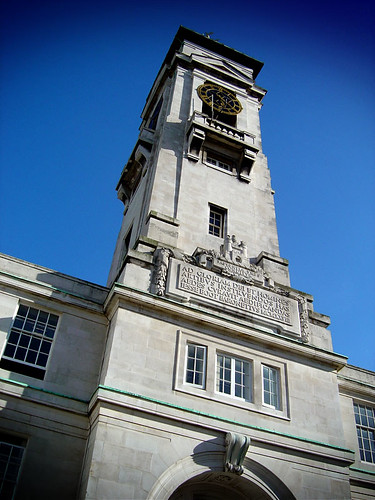 Image - Flickr user Toxophilite (CC)
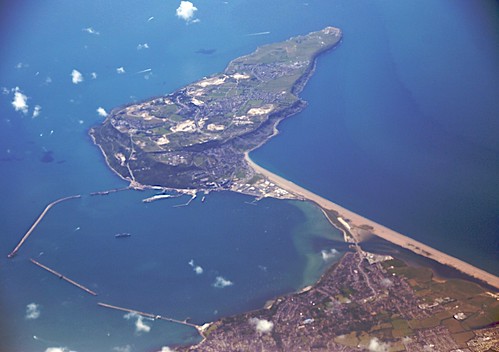
Click here to find out more from the Times Online...
Image - Flickr user Toxophilite (CC) Image - Flickr user Sharkbait (CC)
Click here to find out more from the Times Online...
Wednesday, 14 January 2009
Year 13 - Coastal Processes and Landforms
A quick recap this morning of the main processes affecting the coastline (various processes of erosion, sub-aerial processes...), how geology affects rates of erosion, and then various erosional and depositional landforms that you need to be familiar with:
- headlands and bays
- caves, blowholes, geos, arches, stacks, stumps
- wave-cut notches and platforms
- beaches (storm beaches, berms, ridges, runnels, cusps, ripples)
- spits, bars and tombolos
Some nice sketch maps of the key landforms of the Holderness Coast and the Jurassic Coast, a discussion about whether Chesil Beach was a bar or a tombolo, and the some short-answer exam questions - don't forget that if you have time before next Wednesday, that it would be useful for you to have had a go at marking your questions.
My photos that we looked at of the Flamborough area and of the Jurassic Coast are all on Flickr - not brilliant pictures, but should serve as a bit of a reminder of the landforms and features that we talked about this morning.
- headlands and bays
- caves, blowholes, geos, arches, stacks, stumps
- wave-cut notches and platforms
- beaches (storm beaches, berms, ridges, runnels, cusps, ripples)
- spits, bars and tombolos
Some nice sketch maps of the key landforms of the Holderness Coast and the Jurassic Coast, a discussion about whether Chesil Beach was a bar or a tombolo, and the some short-answer exam questions - don't forget that if you have time before next Wednesday, that it would be useful for you to have had a go at marking your questions.
My photos that we looked at of the Flamborough area and of the Jurassic Coast are all on Flickr - not brilliant pictures, but should serve as a bit of a reminder of the landforms and features that we talked about this morning.
Wednesday, 7 January 2009
Yr13 - Wednesday
Reminder about some of the coasts work that we started before the summer:
The Coast as a System
Waves
Tides
Sediment Cells
High and Low Energy Coastlines
Concordant/Discordant Coastlines
Erosional landforms (especially those wave-cut platforms!)
Depositional Landforms
Landforms related to sea level change
And the best news of all.... Coursework is packaged up and gone!!! Well done!!!!!
The Coast as a System
Waves
Tides
Sediment Cells
High and Low Energy Coastlines
Concordant/Discordant Coastlines
Erosional landforms (especially those wave-cut platforms!)
Depositional Landforms
Landforms related to sea level change
And the best news of all.... Coursework is packaged up and gone!!! Well done!!!!!
Tuesday, 23 September 2008
Year 13
Some well-thought out presentations about the areas we'll be visiting next week in Miss Bradford's lesson. Some of you still falling into the old "reading from the ppt" trap though!! Argh!!
We then finished our Las Vegas case study posters - remember, an example of a secondary tourism resource.
The essay question that we didn't have time to consider was:
With reference to one or more areas that you have studied, discuss the extent to which tourism is dependent on primary resources.
With Wales next week, and a coastal statistics/fieldwork exercise that I am going to give you tomorrow, you don't need to be writing this essay yet. However, if you want to have a bit of a think about it, and brainstorm ideas/points/examples that you might want to include, then that would be a good idea.
Don't forget that if you haven't completed your East Midlands tourism work (apart from Lucy) that I need it tomorrow, or else there will be trouble! Also, I am expecting you to come with examples of 5 glacial landforms/features tomorrow - Laura/Ed/Amy's group gave you three this morning if you're struggling!
We also had a quick look at the itinerary for next week, and reminded you of our expectations of you. If you still haven't returned your medical form, you need to make sure that I get this as a matter of urgency!!
We then finished our Las Vegas case study posters - remember, an example of a secondary tourism resource.
The essay question that we didn't have time to consider was:
With reference to one or more areas that you have studied, discuss the extent to which tourism is dependent on primary resources.
With Wales next week, and a coastal statistics/fieldwork exercise that I am going to give you tomorrow, you don't need to be writing this essay yet. However, if you want to have a bit of a think about it, and brainstorm ideas/points/examples that you might want to include, then that would be a good idea.
Don't forget that if you haven't completed your East Midlands tourism work (apart from Lucy) that I need it tomorrow, or else there will be trouble! Also, I am expecting you to come with examples of 5 glacial landforms/features tomorrow - Laura/Ed/Amy's group gave you three this morning if you're struggling!
We also had a quick look at the itinerary for next week, and reminded you of our expectations of you. If you still haven't returned your medical form, you need to make sure that I get this as a matter of urgency!!
Wednesday, 25 June 2008
Today...
Some very good mini-lessons today - well done.
We looked at rias, fjords, raised beaches and relict cliffs. We talked about eustatic and isostatic sea level change (we will talk about this more at a later date).
We also looked at geos, blowholes, cracks, caves, arches, stacks, stumps, headlands and bays, wave-cut notches and wave-cut platforms. We also considered concordant and discordant coastlines.
Make sure that you are clear about all of these!
The revision website that Laura mentioned is www.revision-notes.co.uk - there is some useful stuff on there but I've just spotted several mistakes in the bits I've looked at so be careful!! The S-Cool site that I have mentioned before is also handy.
If you are in the group that were not ready today, make sure that you are sorted for Friday (I will definitely be in school, and so there will definitely be a lesson).
Also, a reminder about Wales money/permission slips... Someone asked if you can pay all the money at once - absolutely you can if you/parents are happy to do that!! The sooner it's sorted the better!
We looked at rias, fjords, raised beaches and relict cliffs. We talked about eustatic and isostatic sea level change (we will talk about this more at a later date).
We also looked at geos, blowholes, cracks, caves, arches, stacks, stumps, headlands and bays, wave-cut notches and wave-cut platforms. We also considered concordant and discordant coastlines.
Make sure that you are clear about all of these!
The revision website that Laura mentioned is www.revision-notes.co.uk - there is some useful stuff on there but I've just spotted several mistakes in the bits I've looked at so be careful!! The S-Cool site that I have mentioned before is also handy.
If you are in the group that were not ready today, make sure that you are sorted for Friday (I will definitely be in school, and so there will definitely be a lesson).
Also, a reminder about Wales money/permission slips... Someone asked if you can pay all the money at once - absolutely you can if you/parents are happy to do that!! The sooner it's sorted the better!
Wednesday, 11 June 2008
Welcome back Year 12!
In our first lesson after your exams, we looked at the A2 course.... talked about the topics we will be covering... and looked at the links between them (synopticity!!).
We also mentioned Donald Trump's proposals to develop a £1 million golf resort in Aberdeenshire. Mr Trump gave evidence at a public inqury yesterday, and is considering an appeal after his plans were rejected.
Today, we started to look at Coasts. We talked about the coast as an open system (inputs, processes and outputs) and then looked at lots of different coastlines - what factors affect the shape, form and appearance of the coastline, and why is there so much variation?
We also mentioned Donald Trump's proposals to develop a £1 million golf resort in Aberdeenshire. Mr Trump gave evidence at a public inqury yesterday, and is considering an appeal after his plans were rejected.
Today, we started to look at Coasts. We talked about the coast as an open system (inputs, processes and outputs) and then looked at lots of different coastlines - what factors affect the shape, form and appearance of the coastline, and why is there so much variation?
Subscribe to:
Posts (Atom)

